
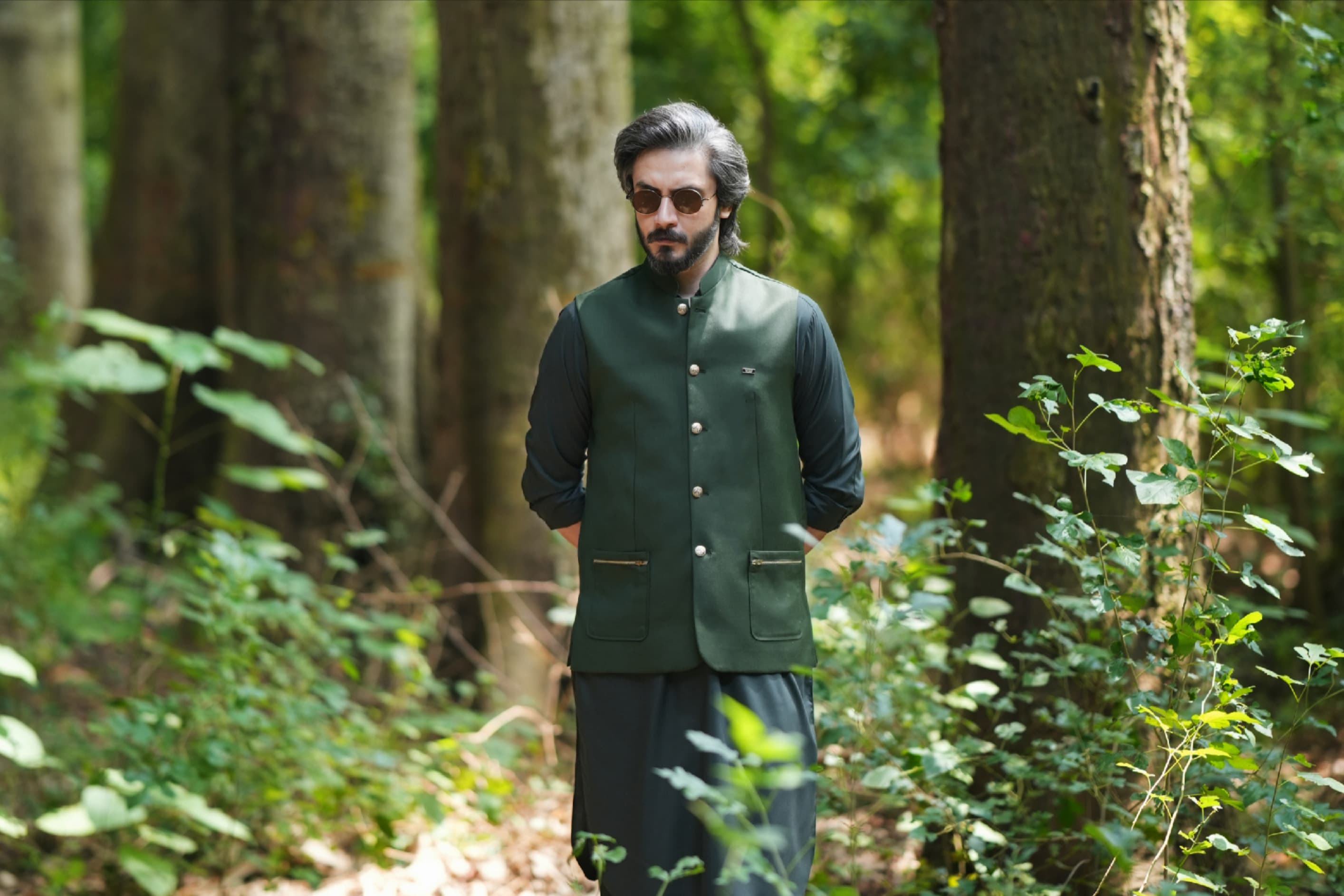
Men's Waistcoats in Pakistan: The Complete 2026 Guide to Styles, Fit, Fabrics & Occasions
A waistcoat is the single fastest upgrade in Pakistani menswear. The same white kameez shalwar you wear on a Friday becomes a wedding-ready outfit the moment a well-cut waistcoat goes over it. Yet most men buy one without knowing how it should fit, which fabric survives a Lahore summer, or whether the bottom button stays open or closed.
This guide answers every question we hear from customers at Raees, a premium Pakistani men's ready-to-wear brand from Lahore based on the waistcoats we cut, photograph, and wear ourselves. No stock images, no recycled advice: every styling note here comes from our own shoots and fittings.
What is a waistcoat in Pakistani menswear?
A waistcoat also called a *waskat* is a sleeveless, fitted layering piece worn over a kameez or kurta. In Pakistan it sits at the intersection of eastern and western dressing, a tailoring tradition borrowed from the three-piece suit, adapted to shalwar kameez. It is the standard formal layer for weddings, Eid, Jummah, and office wear with eastern attire.
What separates a Pakistani waistcoat from a western suit vest is the cut: it runs slightly longer to sit correctly over a kameez, the collar options differ (band/sherwani collar vs. notch or V-neck), and the fabrics karandi, suiting, jamawar, raw silk, velvet are chosen for the climate and the occasion calendar, not for an office suit.
How do you wear a waistcoat with shalwar kameez?
Wear the waistcoat fitted but not tight over a well-pressed kameez, keep the kameez length few inches longer than the waistcoat hem, button it fully (or leave only the bottom button open on a 3+ button cut), and finish with khussa or loafers depending on formality.
The proportions are what most men miss. The waistcoat should end around the hip so the kameez shows cleanly beneath it . If the waistcoat swallows the kameez or rides up above the waist, the silhouette breaks. The shoulder seam must sit exactly on your shoulder bone; everything else can be adjusted by a tailor, shoulders cannot.
For contrast, follow one simple rule: **light kameez, dark waistcoat, dark kameez, light or textured waistcoat.** A white or off-white kameez shalwar under a deep navy, plum, or black waistcoat is the most reliable formal combination in Pakistani menswear, which is exactly why it never leaves our own lineup.
How should a waistcoat fit a man?
A correctly fitted waistcoat lies flat against the chest with no pulling at the buttons, hugs the waist without pinching, ends at the hip bone, and allows you to slide a flat hand (not a fist) between the fabric and your chest.
Run this five-point check before buying:
1. Shoulders: Seam sits on the bone, no overhang, no dig.
2. Chest: Buttons close without an X-shaped pull in the fabric.
3. Waist: Tapered, follows your body; a boxy waistcoat reads as borrowed.
4. Length: Covers the waistband area; never rides above it when you raise your arms.
5. Armholes: High enough that the waistcoat doesn't gape when you move.
If you're between sizes, size for the shoulders and chest. A tailor can take in the waist in one sitting. The reverse is not true.
Common mistakes we see at fittings: choosing a size up "for comfort" (it collapses the whole look), wearing a heavy shiny fabric to a summer daytime event, and pairing a formal waistcoat with casual sneakers. A simple, well-matched outfit always beats a flashy, ill-fitting one.
Which waistcoat color goes with which shalwar kameez?
Pair light kameez shades (white, off-white, cream, sky) with dark waistcoats — navy, black, plum, deep green, charcoal. Pair dark kurtas (black, navy, chocolate) with lighter or textured waistcoats — beige, tan, grey, rust.
Tested combinations from our own shoots:
Kameez Shalwar | Waistcoat
| Best For White / Off-white | Plum, Navy, Black | Barat, Walima, formal dinners |
| Cream / Beige | Deep green, Tan, Brown | Nikkah, daytime weddings |
| Black | Empire black (tone-on-tone) or Tan | Evening events, Walima |
| Sky / Light blue | Navy, Charcoal | Eid, office, Jummah |
| Olive / Earth tones | Grey, Stone | Semi-formal, mehndi guest |
For 2026, earthy and jewel tones lead: plum, sapphire, deep olive, and tan are pulling ahead of the older maroon-and-gold default — a shift we see directly in what sells fastest in our own range.
What is the best waistcoat fabric for summer in Pakistan?
For Pakistani summers, choose breathable suiting blends, Linen, cotton-rich karandi, or lightweight blended wash-and-wear; reserve raw silk and jamawar for evening events, and velvet strictly for winter weddings.
A quick fabric map:
Suiting / blended (wash-and-wear): Everyday formal, office, Jummah. Holds structure, breathes, easy care.
Karandi / cotton-rich weaves: Daytime summer events. The most comfortable option from March through October.
Raw silk: Weddings and evening functions. Sheen without heaviness.
Jamawar: Barat, groomswear, festive formal. Pattern and richness.
Velvet: November–February only. Unmatched depth for winter barats and walimas; punishing in heat.
If you attend long outdoor functions and in Pakistan, you will, fabric weight matters more than any styling rule on this page. A man sweating through jamawar in June looks worse than a man comfortable in plain karandi.